

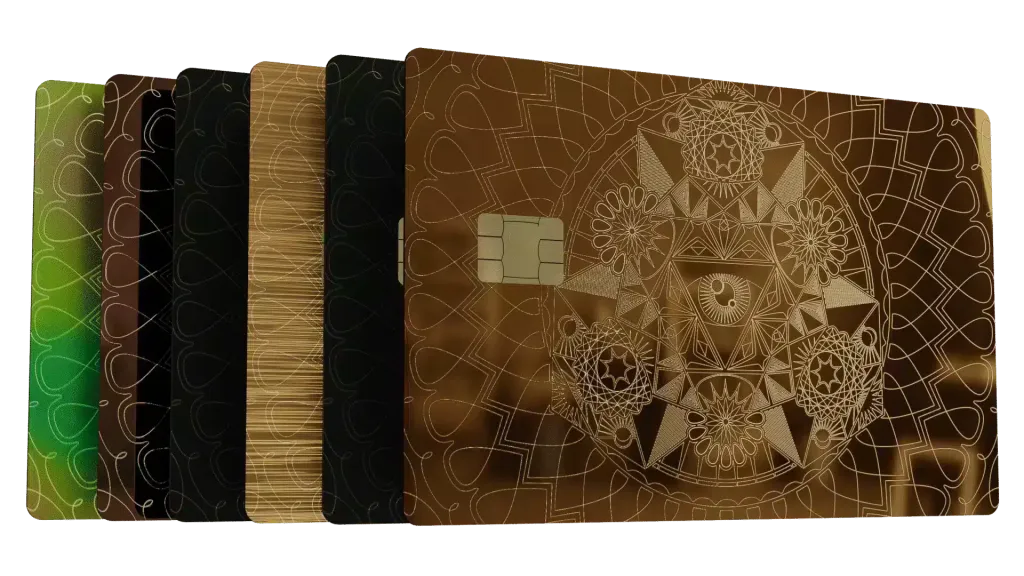
In the ever-evolving world of financial tools, today’s credit cards are far more than mere payment methods; they’re style statements. Trends in credit card design, including the rise of metal cards, a shift towards minimalism, and increasing personalization, signify a change in consumer preferences.
Whether you’re flaunting a sleek metallic finish or showcasing a card that mirrors your unique personality, the evolution of credit card designs speaks volumes about our contemporary societal inclinations.
Metal cards: combining luxury and durability

Once exclusive to the elite, metal cards have captured the public’s imagination, merging opulence with practicality. The allure of these sturdy cards lies in their sophisticated weight and feel, a far cry from the traditional plastic. Such cards often come packed with premium features, attracting those who seek both distinction and quality in their financial dealings.
Banks and financial institutions understand this allure, and many now offer metal options as a cornerstone feature for their premium clientele. If you’re considering the shift, look into cards like the American Express Platinum or the Chase Sapphire Reserve. These options not only provide a tangible feeling of luxury but are also loaded with perks like travel credits and exclusive event access.
The appeal of minimalism: less is more
Minimalism in card design epitomizes the “less is more” philosophy. These cards often eschew flashy logos, excessive text, and bright colors for a more refined, understated look. The idea is to focus on elegance and simplicity, stripping away the superfluous elements to allow the true value to shine through.
With the shift towards contactless payments, the function is now largely integrated into the form, and the utility is seamless. Minimalist designs are not only aesthetically pleasing but also offer practical advantages in terms of security and ease of use. Banks like Monzo and N26 already lead the charge with cards that exude elegance without compromising on functionality.
Personalization: expressing individuality
Personalization in card design takes center stage, allowing cardholders to express their individuality through custom designs. Whether it’s a favorite color, a personalized photo, or a unique texture, customized cards provide a canvas for self-expression. This trend enables customers to feel a deeper connection to their cards, transforming a routine possession into something special.
For those interested in personalized options, services such as Capital One’s custom card design allow you to upload images and experiment with designs that resonate with who you are. This trend not only caters to aesthetic preferences but also supports the notion of individual empowerment in how we choose to present our financial identities.
How to choose your ideal card design
Selecting the perfect card design involves more than just choosing what looks good. Consider how the card’s features align with your lifestyle and financial habits. If luxury appeals to you, opt for a metal card with travel benefits. For those who value simplicity, a minimalist design offers a sleek look coupled with modern features.
For a personalized touch, think about what imagery or color speaks to your personal journey. Many banks now offer easy-to-use platforms for designing your card online, allowing experimentation before committing to the final design. The beauty of these trends is the freedom to choose a card that feels like an extension of yourself.
Embracing the future of card design
The future of credit card design is bright, filled with endless possibilities for innovation and personalization. As technology advances and consumer preferences evolve, these modern trends will continue to shape the financial landscape, encouraging a more personal and aesthetic connection with everyday financial tools.
Whether drawn to the allure of metal, the elegance of minimalism, or the uniqueness of personalization, there is a world of options eager to cater to every taste and need. As you select your next card, consider the story you wish it to tell. After all, in today’s world, a credit card is not just a tool for transactions but a statement of identity.