

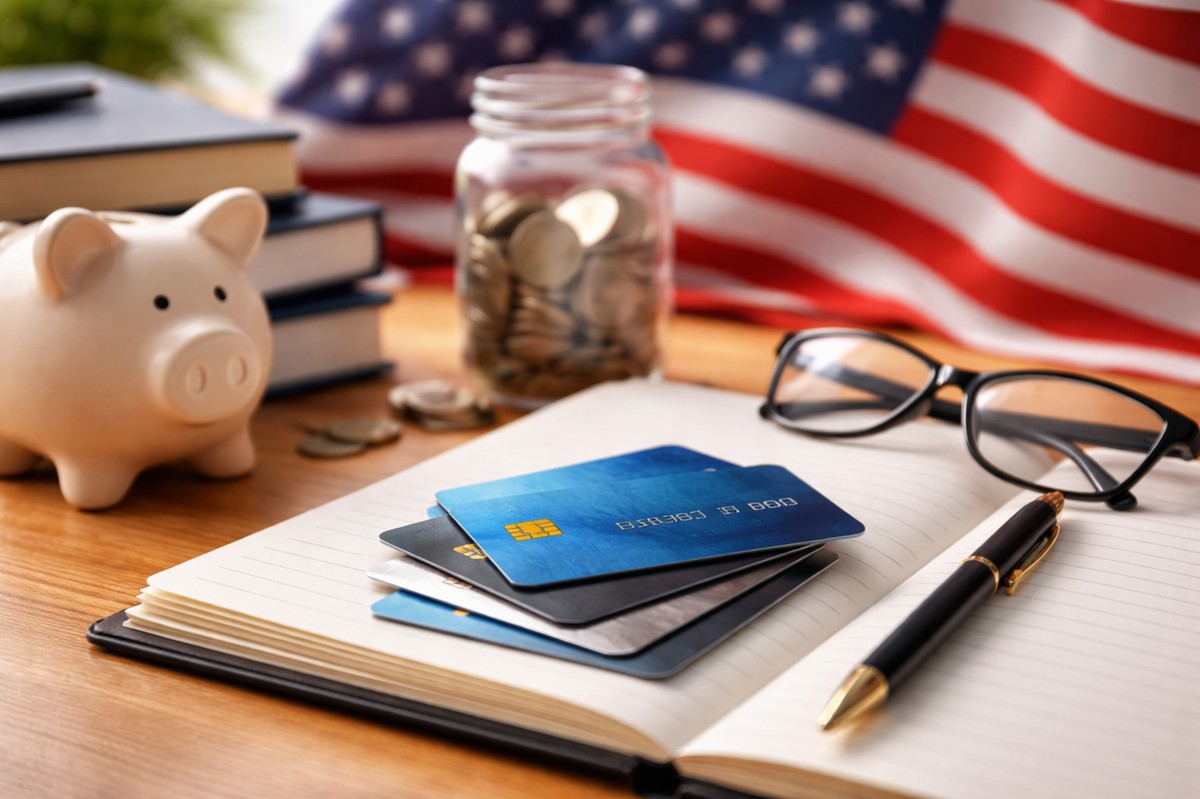
Understanding how money works is a central challenge for many Americans, especially in a society where consumption is deeply woven into daily life. From an early age, individuals are exposed to complex financial products, and credit cards often become the first formal tool through which people interact with the credit system.
Credit as a learning tool in everyday life
In the United States, access to credit is relatively easy, and this accessibility turns borrowing into a practical classroom. Through regular use, consumers learn how interest accumulates, how payment deadlines affect balances, and how financial discipline can reduce long-term costs.
Monthly statements act as informal lessons, revealing the consequences of minimum payments or impulsive spending. Over time, users begin to understand the link between behavior and financial health, especially when mistakes lead to tangible setbacks such as fees or higher interest rates.
Educational institutions and nonprofit organizations increasingly recognize this dynamic. Instead of focusing solely on theory, many programs encourage real-world engagement, helping individuals interpret statements, understand terms, and reflect on their choices. This approach acknowledges that experience, when guided, can be a powerful teacher.
Credit history and personal responsibility
One of the most distinctive features of the American system is the emphasis on credit history. Scores influence housing opportunities, employment screenings, and even insurance rates. As a result, people quickly realize that financial actions leave lasting traces.
This awareness fosters a sense of responsibility, pushing users to think beyond the present moment and consider future implications. Learning to manage borrowing wisely becomes less about restriction and more about strategic decision-making.
Challenges and opportunities for future generations
Despite its potential, reliance on borrowing also carries risks. Without proper guidance, young adults may fall into cycles of debt that are difficult to escape. Ultimately, financial literacy in the United States evolves not only in classrooms, but in everyday transactions. By reframing common tools as opportunities for growth, society can transform routine economic activity into meaningful education.
👉Read also: Credit cards in the United States: how credit scores determine limits and interest rates